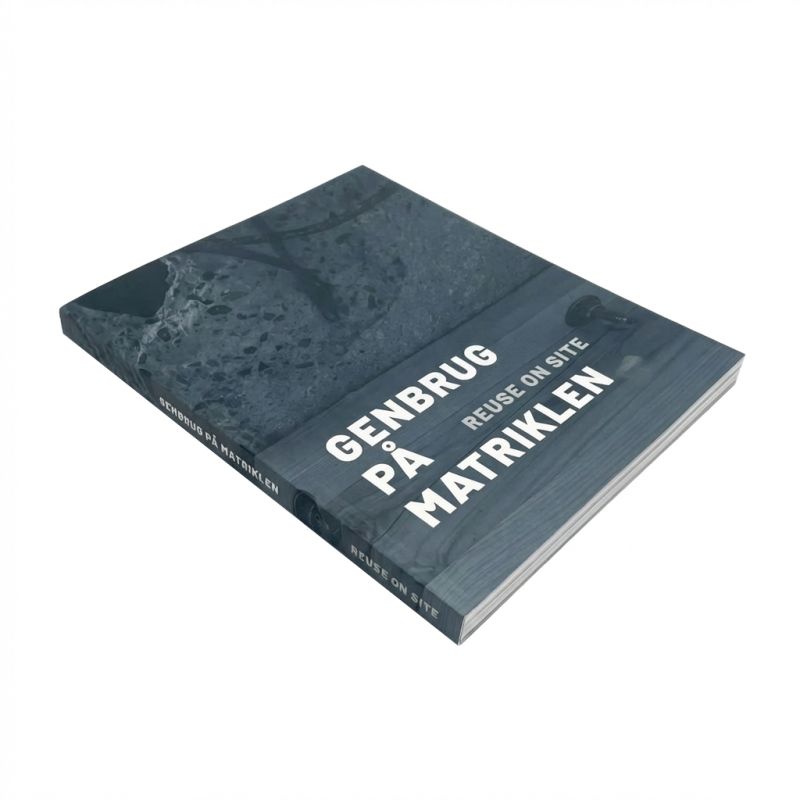
Reuse on Site
This publication examines how architects can work with materials already available on construction sites and explores the barriers that can prevent it.
How does architectural practice change when design begins with the materials that are already available? That question is central to the research project “Recycling on Site,” that compiles experiences with direct reuse in construction.
The project investigates how architects’ design processes are affected when they work with existing rather than new materials. Recycled materials are often unique and do not fit into traditional processes. Furthermore, uncertainty regarding contamination such as asbestos and PCBs can prevent their reuse.
To address these challenges, the project utilizes environmental screening data and visualised data from non-destructive testing. The goal is to provide architects with a better way of assessing how materials can be reused - even before they are dismantled.
The publication presents the methods and findings of the project and highlights howdirect reuse can help reduce the environmental impact of construction. At the same time, it emphasises the need for new design processes where materials play a central role from the beginning.
The project was led by Lotte M. Bjerregaard Jensen, Professor at Aarhus School of Architecture, with support from Realdania. It is part of a broader effort to promote circular workflow in the construction industry.
CEBRA has contributed to the research publication together with DTU—Technical University of Denmark, the Knowledge Center for Circular Economy in Construction, EFFEKT, Anna Mette Exner Arkitektur, Arkitema, JJW ARKITEKTER, SLETH, Søren Jensen Engineering, Kingo, P. Olesen A/S, JDH-BYG, GreenDozer, and Milva.
The book is available in both digital and print formats.